
Turn visual understanding and language into controlled robot action
We prototype multimodal robot applications that ground natural-language instructions in visual scenes, connect them to robot state, and execute actions through reviewed ROS 2 control interfaces.
Discuss your project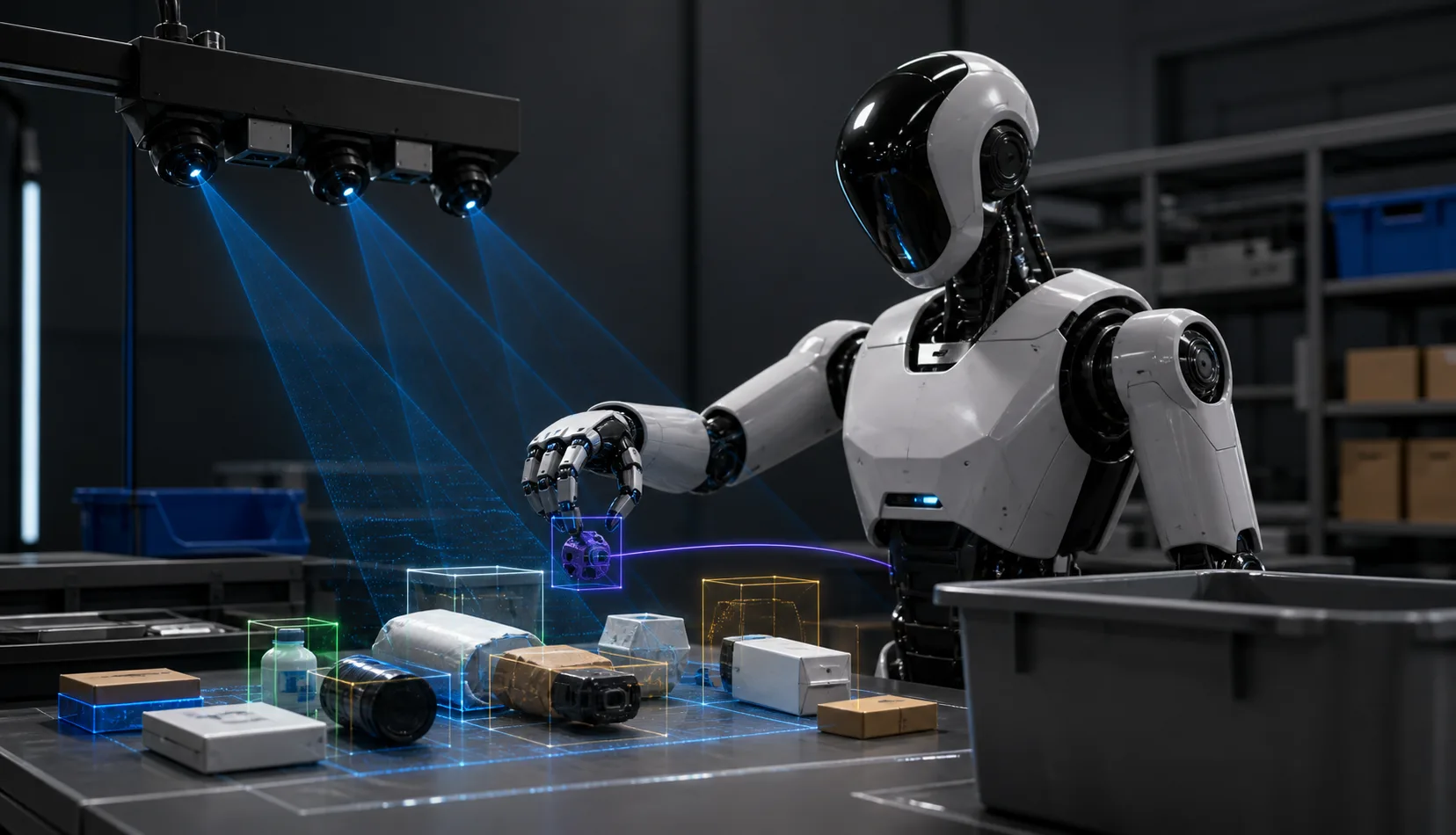
Engineering support tailored to your robot
- Language-driven task interfaces and action decomposition
- Visual grounding, detection and scene context
- Evaluation datasets and failure-case testing
- Safety gates between AI decisions and robot motion
Built with an interoperable robotics stack
From first conversation to a validated robot
- Discovery and scopingWe agree on the robot, software stack, task and measurable success criteria.
- Simulation-first prototypeWe build and test in a digital twin, such as Isaac Sim or Gazebo, before touching hardware.
- Integration on the robotWe bring it onto your hardware through clean ROS 2 interfaces, drivers and safety limits.
- Validation and handoverWe test against the agreed criteria and hand over code, documentation and team training.
Common questions
What is the difference between a VLM and a VLA?
A vision-language model understands images and text; a vision-language-action model also outputs robot actions. We use both, depending on whether the model should plan or act.
Can a robot follow natural-language instructions safely?
Yes, with guard rails. Language is grounded in the visual scene and robot state, and actions go through reviewed ROS 2 control interfaces and safety gates.
Can you prototype with open VLA models?
Yes. We evaluate open models on your task with test datasets and failure-case testing before deciding on fine-tuning or deployment.
From our blog
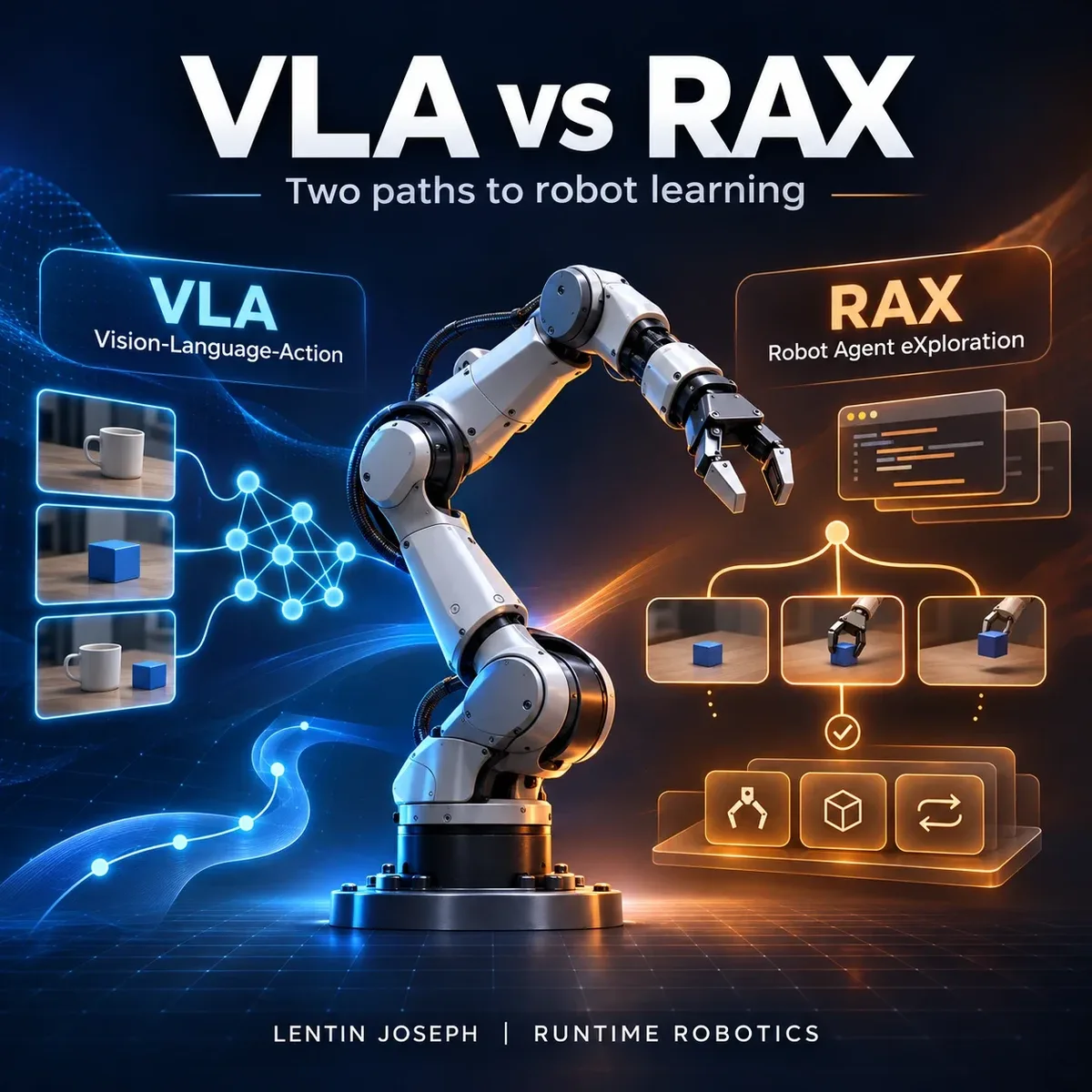
VLA vs RAX: Beyond Imitation Learning?
Two paths to robot learning: Vision-Language-Action models that learn from demonstrations, and RAX coding agents that explore and write their own reusable skills.
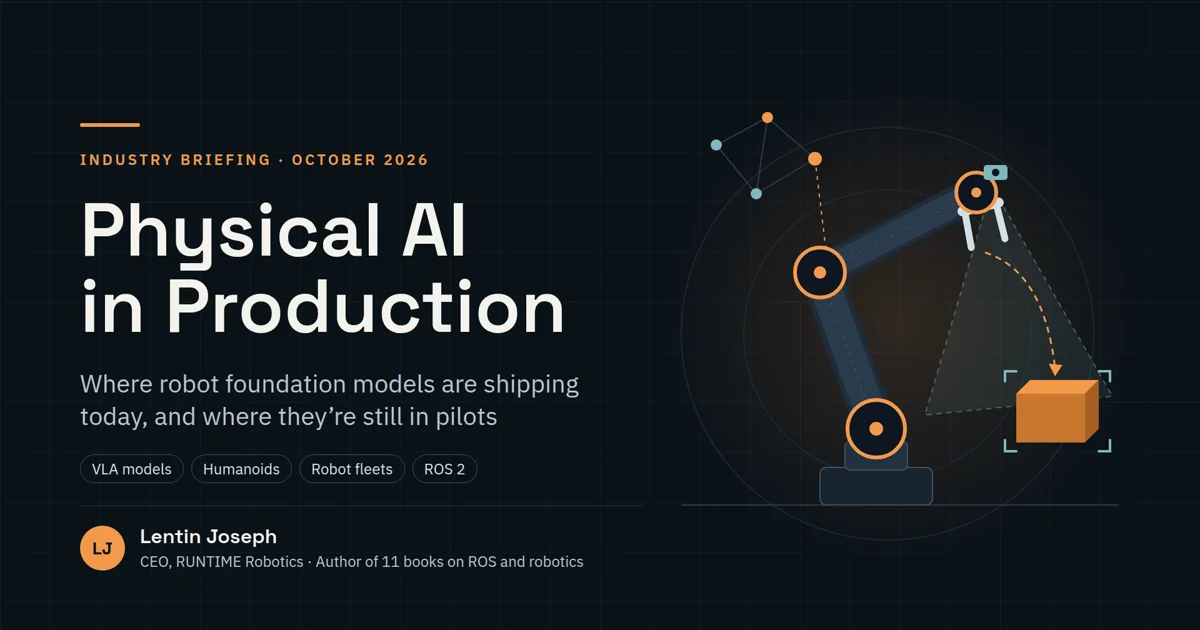
Physical AI in Production, Explained
A 43-slide industry briefing on where robot foundation models are running today, where they're still in pilots, and an eight-stage playbook for taking one to production.
Tell us about your platform, technical goal and timeline.
We can help define the engineering path from an initial prototype to a validated robot-software workflow.
Contact RUNTIME Robotics