
Digital twins, robot simulation and NVIDIA Isaac workflows
Build scalable robot-development workflows with OpenUSD scenes, sensor simulation, synthetic data, Isaac Sim, Isaac Lab and ROS 2 software-in-the-loop testing.
Discuss your project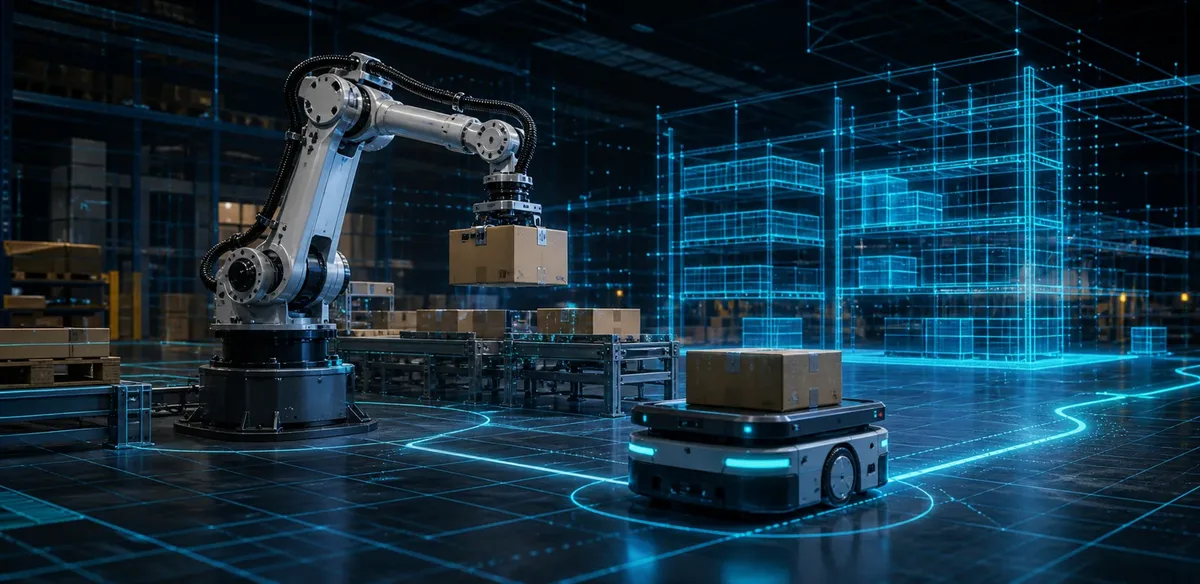
Engineering support tailored to your robot
- OpenUSD robot and environment preparation
- Isaac Sim sensor, physics and scenario setup
- Synthetic-data and domain-randomization workflows
- ROS 2 stack validation before hardware deployment
Built with an interoperable robotics stack
From first conversation to a validated robot
- Discovery and scopingWe agree on the robot, software stack, task and measurable success criteria.
- Simulation-first prototypeWe build and test in a digital twin, such as Isaac Sim or Gazebo, before touching hardware.
- Integration on the robotWe bring it onto your hardware through clean ROS 2 interfaces, drivers and safety limits.
- Validation and handoverWe test against the agreed criteria and hand over code, documentation and team training.
Common questions
What can you build in NVIDIA Isaac Sim and Omniverse?
OpenUSD digital twins of robots and environments, sensor and physics simulation, synthetic-data pipelines and ROS 2 software-in-the-loop tests.
Can you convert our robot and CAD models to USD?
Yes. We prepare robots and environments in OpenUSD, including URDF import, articulation, materials and sensors.
Do you build synthetic datasets?
Yes. For example, we built a pipeline that generates diverse animated humans and produces validated pose datasets with RGB, depth, segmentation and keypoints.
From our blog
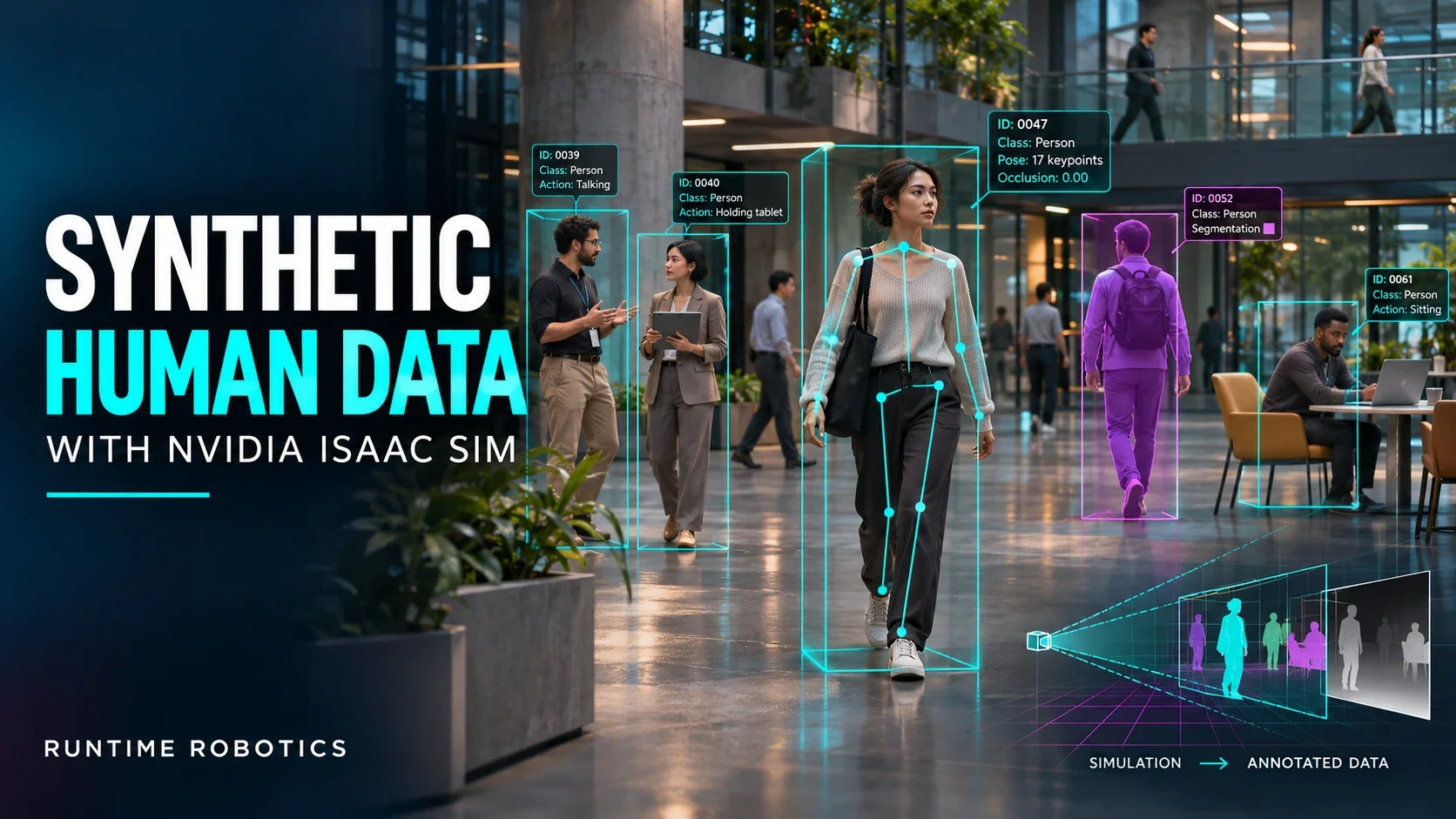
Synthetic Human Data in NVIDIA Isaac Sim
How we build diverse digital humans in Blender, convert them for Isaac Sim, animate them and generate validated pose datasets for robot perception.
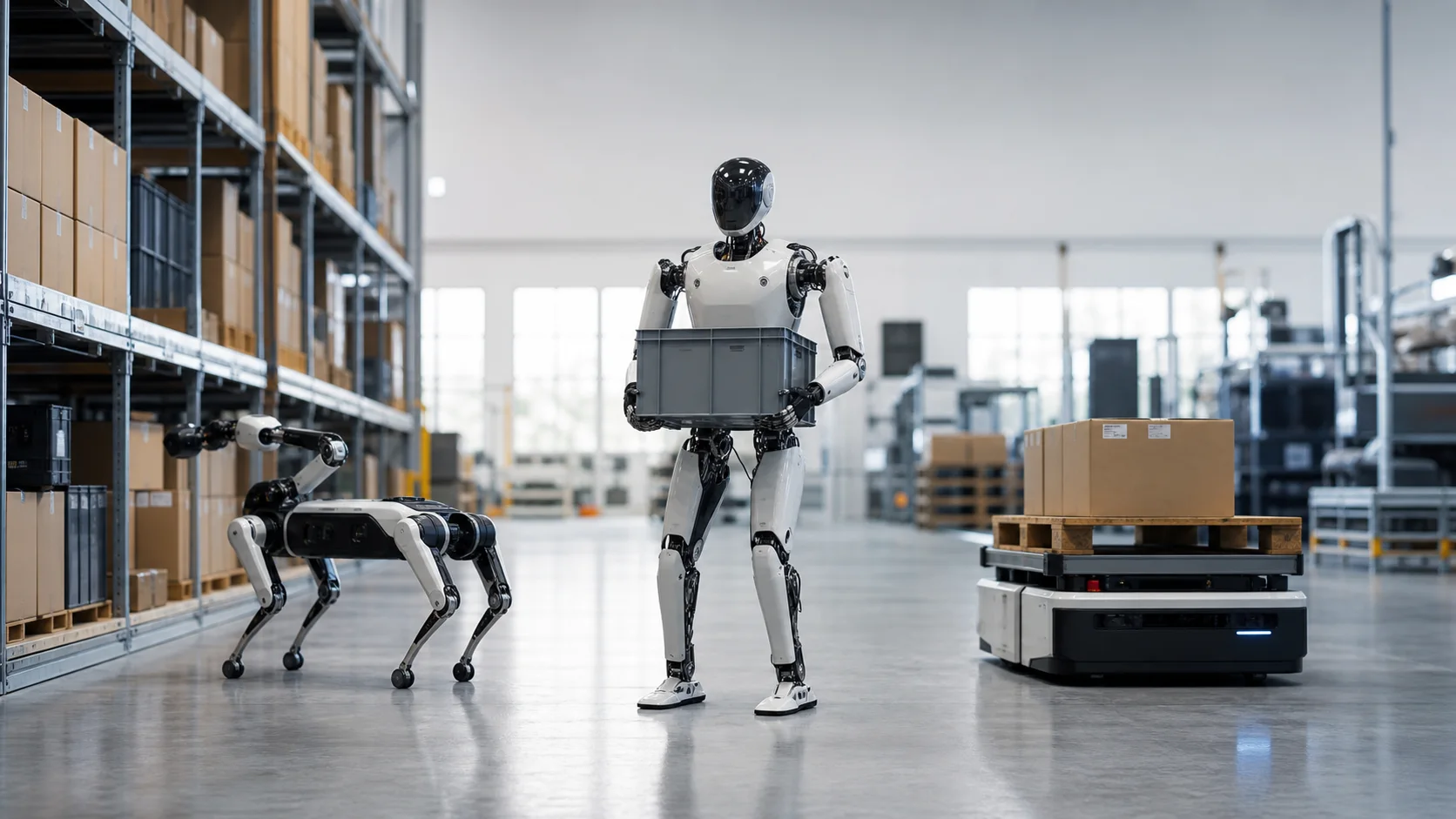
Physical AI, NVIDIA and ROS: The Future of Robotics Software
How ROS 2, NVIDIA Isaac, Omniverse simulation and robot learning are becoming one practical Physical AI workflow.
Tell us about your platform, technical goal and timeline.
We can help define the engineering path from an initial prototype to a validated robot-software workflow.
Contact RUNTIME Robotics