
Build Physical AI systems that work beyond the demo
We help robotics teams connect perception, simulation, learning and dependable robot control into a practical Physical AI workflow for humanoids, quadrupeds, AMRs and industrial systems.
Discuss your project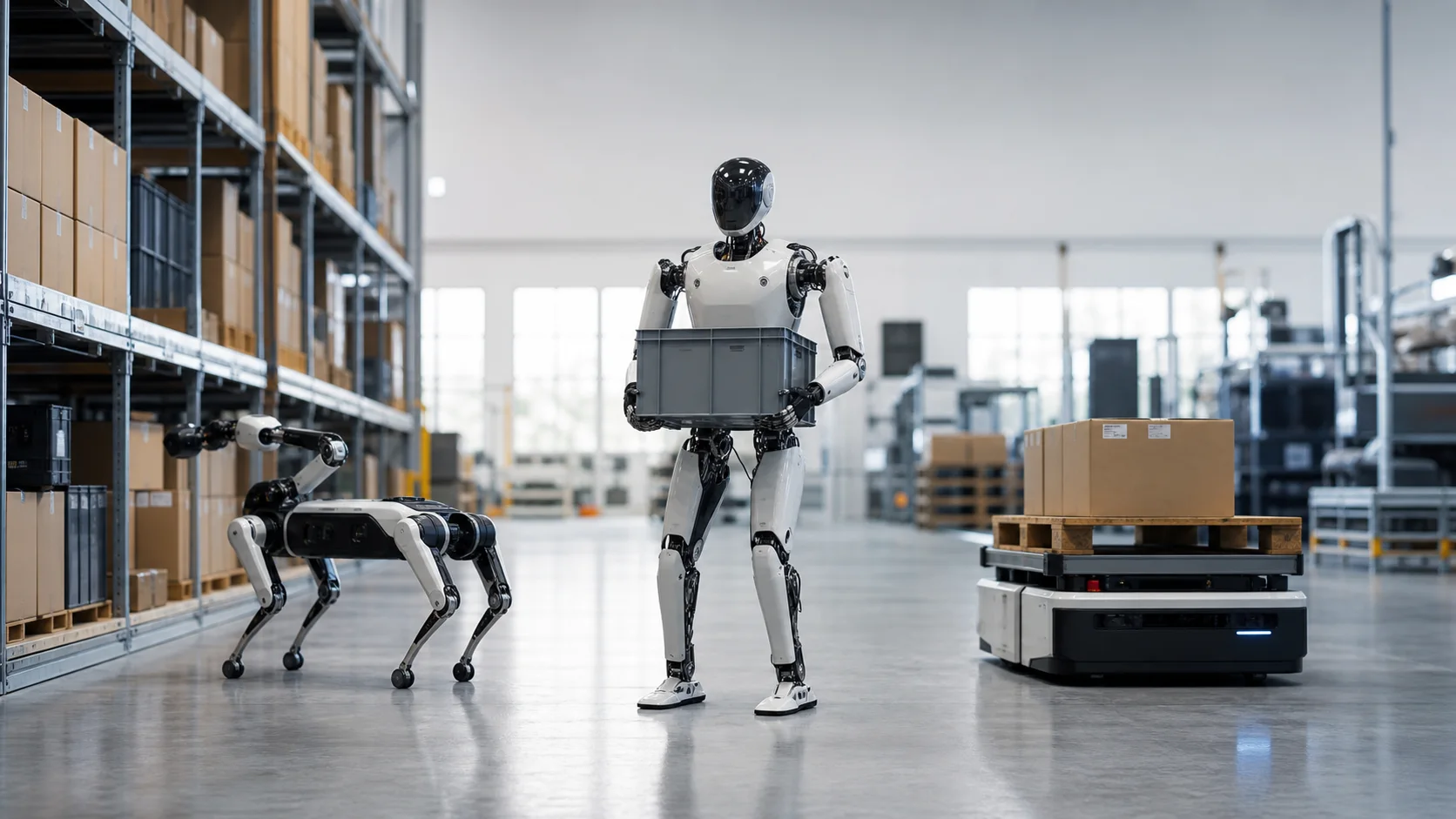
Engineering support tailored to your robot
- System architecture from sensors to robot actions
- Simulation, synthetic-data and software-in-the-loop validation
- Perception, planning and multimodal AI integration
- Measured deployment readiness and safe operational boundaries
Built with an interoperable robotics stack
From first conversation to a validated robot
- Discovery and scopingWe agree on the robot, software stack, task and measurable success criteria.
- Simulation-first prototypeWe build and test in a digital twin, such as Isaac Sim or Gazebo, before touching hardware.
- Integration on the robotWe bring it onto your hardware through clean ROS 2 interfaces, drivers and safety limits.
- Validation and handoverWe test against the agreed criteria and hand over code, documentation and team training.
Common questions
What does a Physical AI project with you look like?
We start from the task and success criteria, prototype in simulation, integrate perception, planning and AI models on the robot through ROS 2, and validate with measurable safety boundaries.
Do we need to train our own foundation model?
Rarely. Most teams fine-tune or wrap an existing model. We help you decide whether to build, fine-tune or call an API, and how to evaluate it.
How do you keep AI-driven robots safe?
We bound the model rather than trust it: safety layers, controllers and staged rollouts decide what reaches the motors.
From our blog
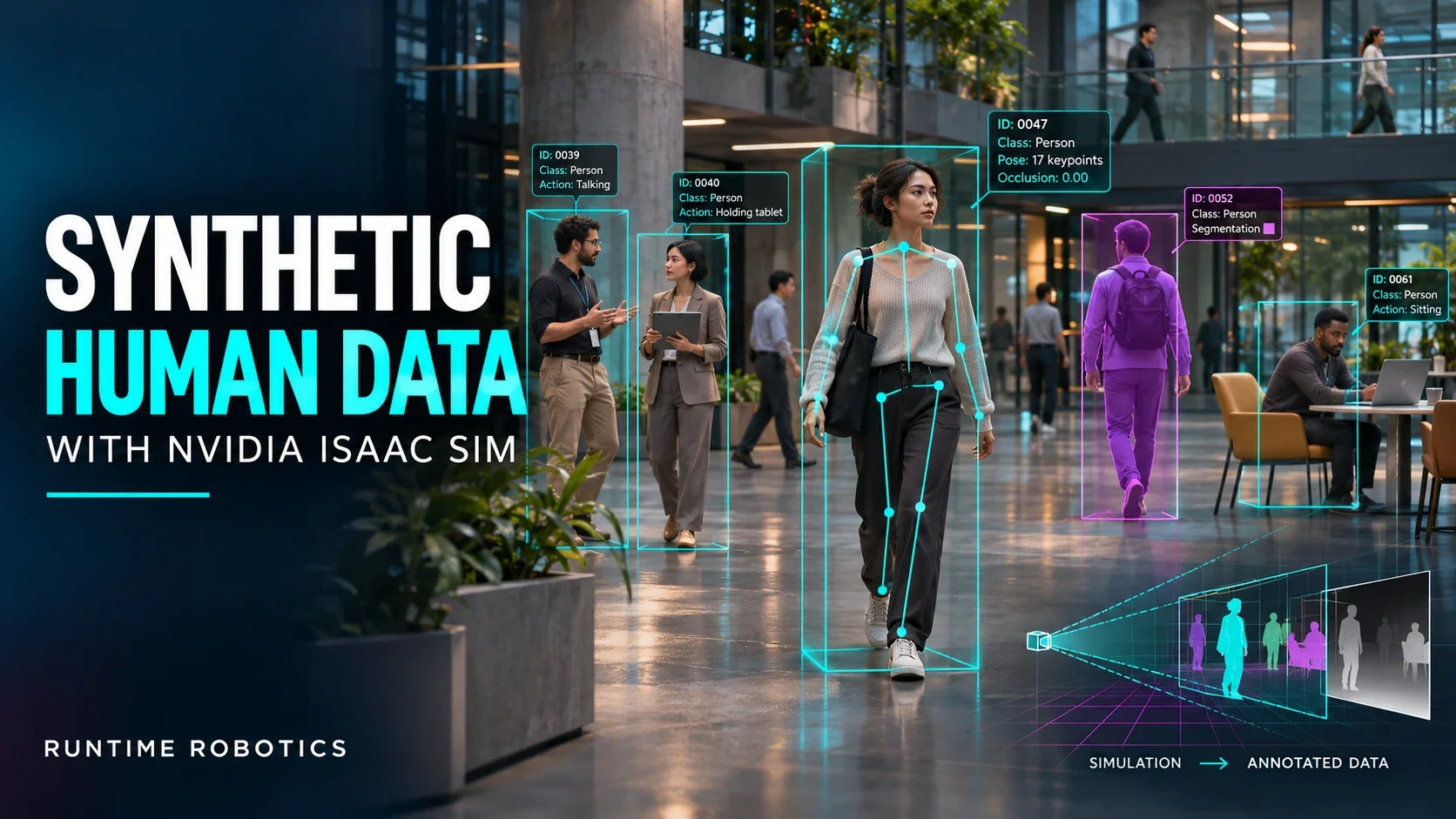
Synthetic Human Data in NVIDIA Isaac Sim
How we build diverse digital humans in Blender, convert them for Isaac Sim, animate them and generate validated pose datasets for robot perception.
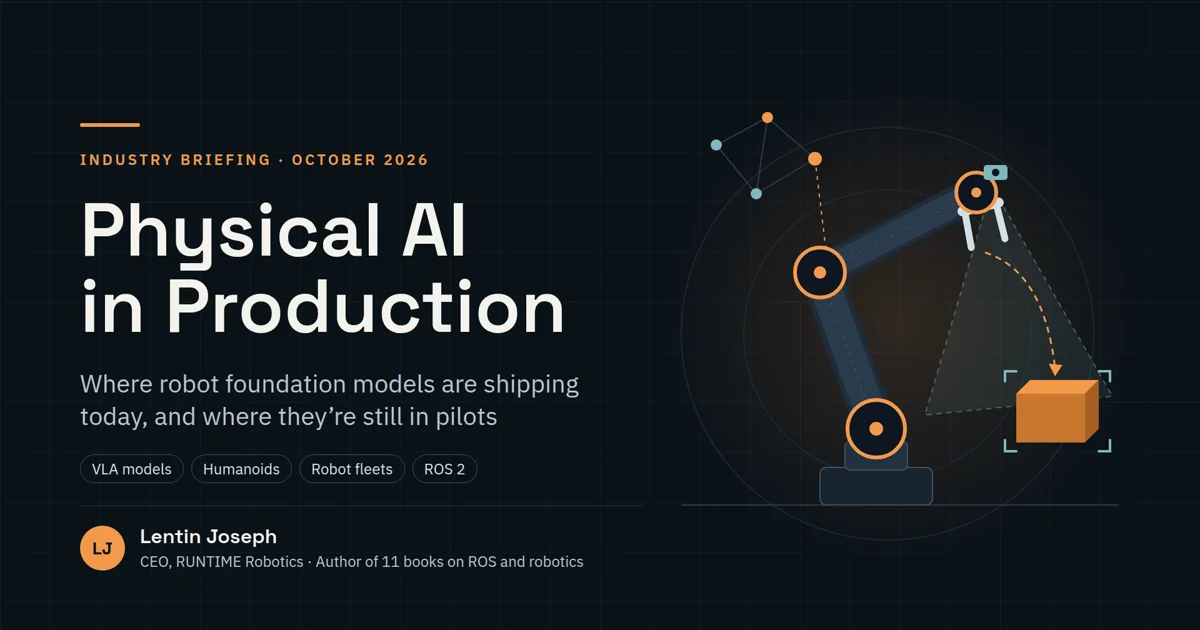
Physical AI in Production, Explained
A 43-slide industry briefing on where robot foundation models are running today, where they're still in pilots, and an eight-stage playbook for taking one to production.
Physical AI, NVIDIA and ROS: The Future of Robotics Software
How ROS 2, NVIDIA Isaac, Omniverse simulation and robot learning are becoming one practical Physical AI workflow.
Tell us about your platform, technical goal and timeline.
We can help define the engineering path from an initial prototype to a validated robot-software workflow.
Contact RUNTIME Robotics